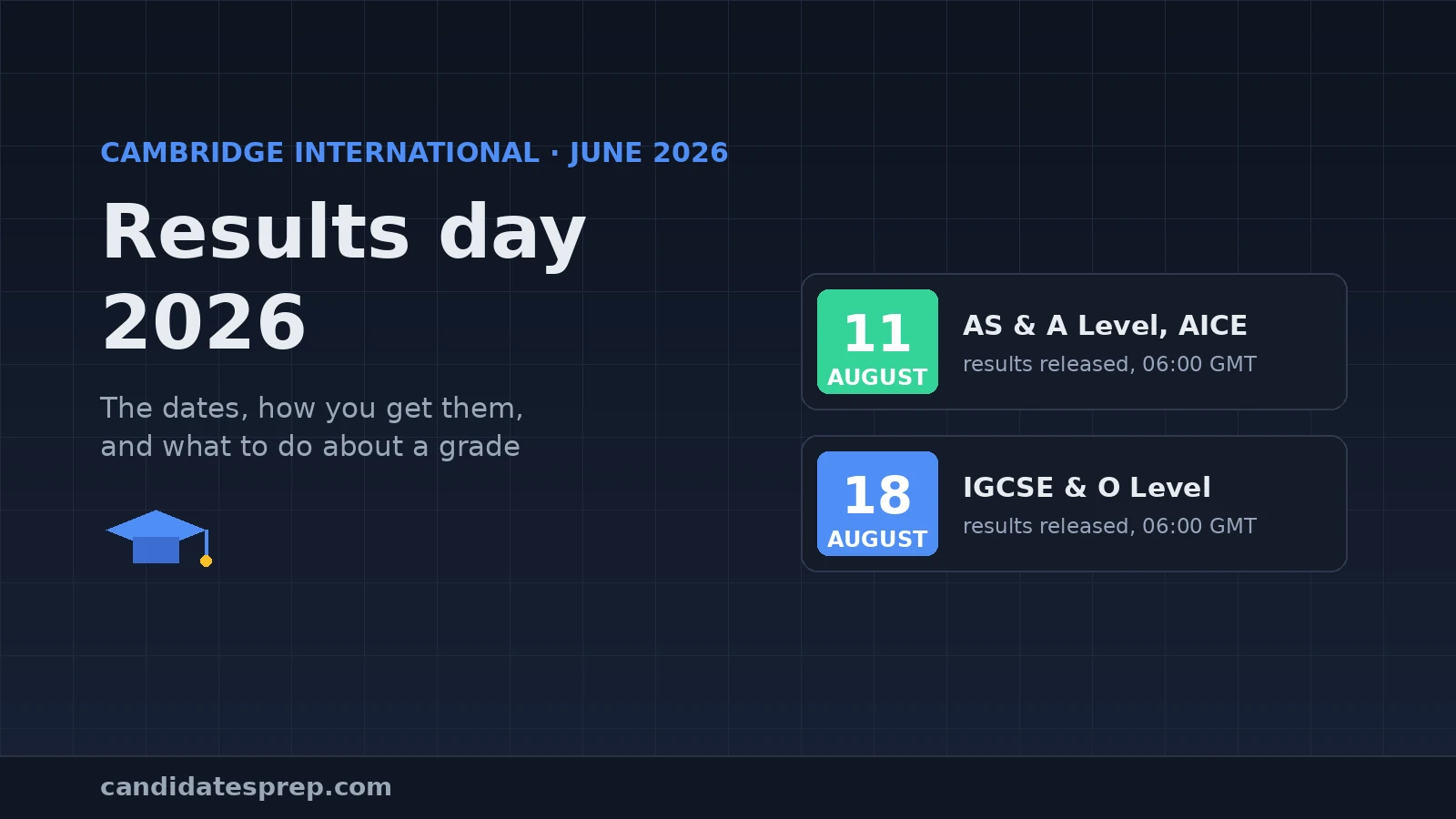
Cambridge International AS & A Level results were released this morning, 11 August 2026, with IGCSE and O Level to follow on 18 August. If you are in Pakistan and planning to study or work here, your Cambridge grades are not the finish line. Local universities, colleges and many employers ask for an IBCC equivalence certificate, which converts your foreign grades into a Pakistani marks equivalent. The single most useful thing you can do today is start that process as soon as you have your results, because it takes time and admission deadlines will not wait.
What IBCC equivalence is, and why you need it
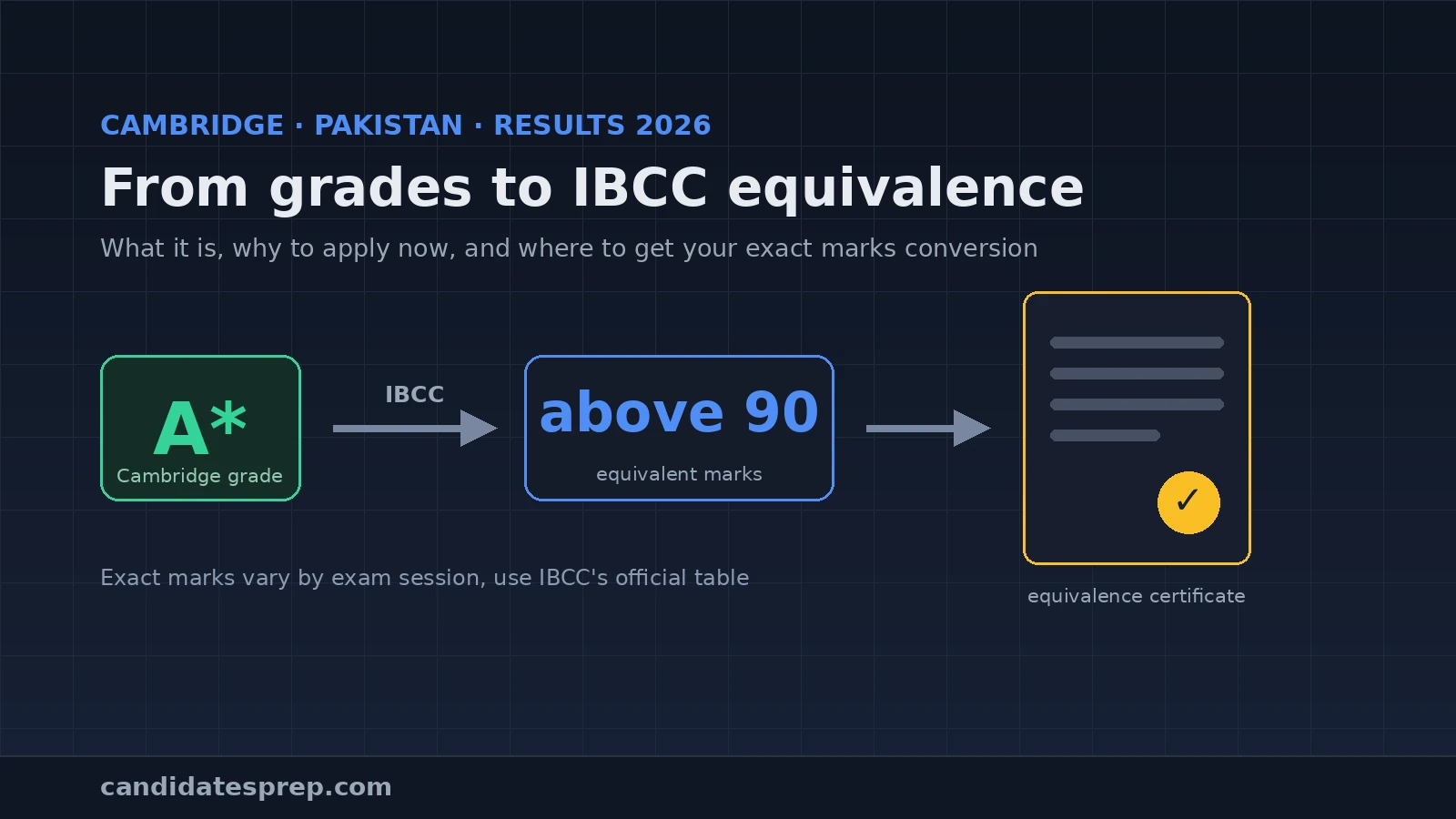
The Inter Board Coordination Commission (IBCC) is the body that converts overseas qualifications, such as Cambridge O Level, IGCSE and A Level, into an equivalent Pakistani marks percentage. Local admissions are built around percentages from Pakistani boards, so a university needs your grades expressed in that currency to compare you fairly against every other applicant. Without an equivalence certificate, most Pakistani institutions cannot process your application, no matter how strong your grades are.
How grades convert to marks
IBCC maps each Cambridge grade to a band of marks. On its official conversion tables, from the 2021 examination session onwards, the top grade *A\ is treated as "above 90", and the scale runs down to E at 45. For the newer numeric grading, grade 9 maps to "above 90"**, while the lowest numeric grade is not counted for IBCC equivalence.
Two important points before you rely on any number:
- The exact marks for each grade are published per examination session. IBCC releases subject-wise "A\* equivalent marks" documents for different sessions, and they are not identical year to year. Use the table that matches your exact exam session, taken from IBCC directly, not a figure copied from a blog or a previous year.
- Equivalence is more than a grade-to-marks swap. IBCC applies its own rules to build your final equivalence, including how subjects are counted and any compulsory-subject requirements. These rules matter for your final percentage, so read the current guidance on the official IBCC conversion page rather than assuming.
How to apply
The application is made to IBCC, and you will need your Cambridge results and supporting documents, and you will pay a fee. IBCC sets the current application route, the exact list of required documents, the fee, and the processing time, and these are the details you must confirm at the source before you start, on the official IBCC website. Do not rely on a third-party summary for the documents or fee, because getting the submission wrong is the most common reason an equivalence is delayed.
A practical tip: your school or exam centre can usually issue a provisional statement of results immediately on release day. That statement, plus prompt submission to IBCC, is what keeps you inside university admission windows while your full certificate is processed.
Timing is the whole game today
Here is why this is a results-day task and not a next-month one. Equivalence takes processing time, and Pakistani university admissions run to fixed deadlines that often open within days of results. Students who wait for "everything to settle" are the ones who end up chasing an equivalence certificate against an admission cut-off. If your results are in your hand today, begin the IBCC process today, or at the latest this week. For O Level and IGCSE candidates, the same applies from 18 August.
If your marks fall short of what you need
If a grade will not convert to the marks a programme requires, you still have options, and it is worth understanding them before you panic.
- Check the grade first. If you have genuine reason to think the marking was wrong, Cambridge has a formal review process through your exam centre. We covered how that works, and the important warning that a review can move a grade down as well as up, in our guide to Cambridge results day.
- Consider a resit. You can resit a subject in a later Cambridge series and submit the improved result for a fresh equivalence. Resitting does not cancel your existing certificate, so you keep your better outcome.
If a resit is on the cards, the time to prepare is now, not the week before. Practising under real exam conditions, full papers, properly timed, is what turns a near miss into a clear pass. CandidatesPrep's simulator lets you sit timed mocks and see exactly which topics are costing you marks, so a resit is a targeted second attempt rather than a repeat of the first.
The bottom line
Cambridge grades open doors in Pakistan only once IBCC has converted them into a recognised marks equivalent. A\* sits at "above 90" and the scale runs down to E at 45, but the exact per-subject marks change by session, so always use IBCC's official table for your own exams. Start the application the day your results arrive, confirm the current documents and fee directly with IBCC, and, if a grade falls short, remember that a review or a resit can still change the outcome.
Facing a resit after results day? Practise under timed exam conditions to target exactly where your marks are being lost, or book a demo if you run a school preparing students for the next series.