Results day is almost here, and knowing exactly what happens, and what your options are, takes some of the fear out of it. Cambridge International has confirmed its June 2026 series dates. This post covers when results arrive, how you get them, and the practical steps to take if a grade is not what you expected, including the one thing about a review that catches people out.
The confirmed dates
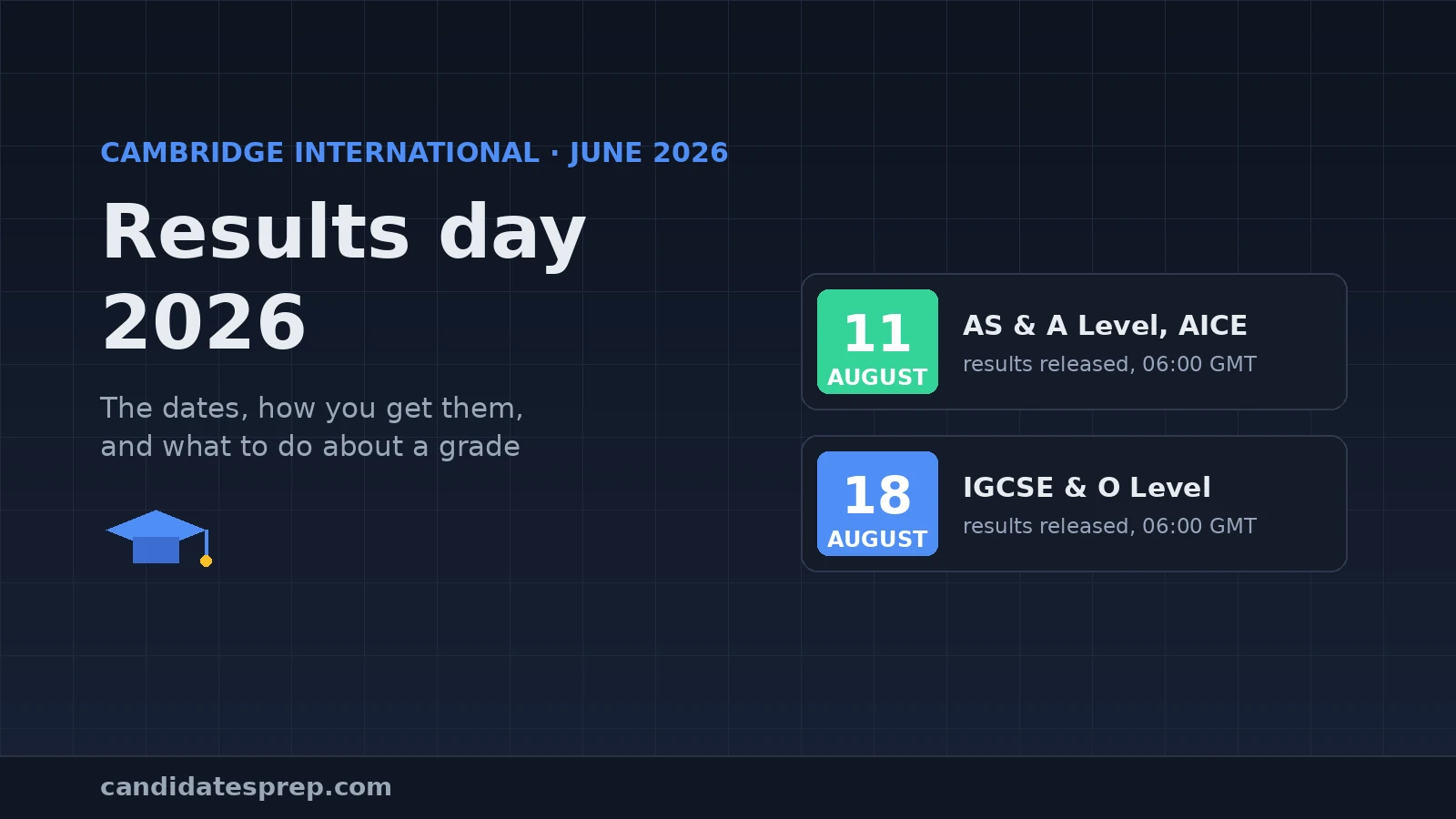
Cambridge has published the June 2026 release dates directly, and they are worth noting to the hour:
- Cambridge International AS & A Level, and AICE: 11 August 2026 at 06:00 GMT/UTC.
- Cambridge IGCSE and Cambridge O Level: 18 August 2026 at 06:00 GMT/UTC.
Times are in GMT/UTC, so convert to your local time zone. In Pakistan (UTC+5), for example, 06:00 GMT is 11:00 in the morning.
How you actually get your results
You do not get your results directly from Cambridge. Cambridge releases them to your school or exam centre, and, in their words, "schools can issue these results to candidates immediately." In practice that means your centre decides how and when it hands results to you on release day, whether by email, portal or in person. If you are a private candidate, your results come through the centre you registered with. If you are not sure of your centre's process, ask your exams officer before the day rather than on it.
First, read the result calmly
When results arrive, take a moment before reacting. Check that every syllabus you sat appears, and that the grades line up with the subjects. Most results are exactly what the marking produced, and the overwhelming majority need no further action. Panic is the enemy of good decisions here, and you have more time and more options than results-day nerves suggest.
If a grade looks wrong: Enquiries about Results
If a grade genuinely does not match your expectation, Cambridge has a formal process called Enquiries about Results (EAR), and it is requested through your exam centre, not by you directly. The two most relevant services are a clerical re-check, which confirms that marks were added and recorded correctly, and a review of marking, where an examiner reviews how your script was marked.
Here is the part people do not expect, and you must understand it before requesting a review: a review of marking can move a grade up, leave it unchanged, or move it down. It is not a one-way appeal. If the review finds the original mark was too generous, your grade can fall. So request a review when you have a genuine reason to think the marking was wrong, not simply because you are disappointed. Talk it through with your subject teacher first.
Two practical points. Deadlines for EAR are tight and are managed through your centre, so if you are considering it, contact your exams officer quickly rather than waiting. And your centre can advise on the fees and the likely turnaround before you commit.
Results and university admissions
For most candidates, results day is really about what happens next with university places.
- If you have met your offer, act promptly. Send your results to the university through whatever route they specified, and complete any confirmation steps quickly, as places can be time-sensitive.
- If you have narrowly missed an offer, do not assume it is lost. Contact the university's admissions team directly; many will consider a near miss, especially if you explain your situation. If you also intend to request an EAR review, tell the university, as some will hold a place pending the outcome.
- If you are reconsidering your path, you have options beyond this series, which brings us to resits.
Resitting in a later series
If a grade will not do what you need, you can resit the subject in a later Cambridge series. Cambridge's own guidance is that resitting does not cancel your existing certificate, so you keep your better result, and your statement of results does not draw attention to how many attempts you made. Your exam centre can confirm which series and entry deadlines apply to you.
The bottom line
Cambridge AS & A Level and AICE results arrive on 11 August 2026, and IGCSE and O Level on 18 August, both at 06:00 GMT/UTC, through your exam centre. Read them calmly, use the Enquiries about Results process through your centre only when you have a real reason and understand a grade can go down as well as up, and remember that a disappointing result is rarely the end of the road. Offers can be negotiated, and subjects can be resat without losing what you have already earned.
Planning a resit, or preparing students for the next series? Practise under timed exam conditions, or book a demo to see how teachers track cohort readiness on CandidatesPrep.