Being flagged by online proctoring is not a finding of cheating; it is a prompt for a human to review a moment of your session. Automated systems flag anything unusual, honest candidates included, and a person decides what, if anything, it means. Here is how the process works and what to do if it happens to you.
A flag is a signal, not a verdict
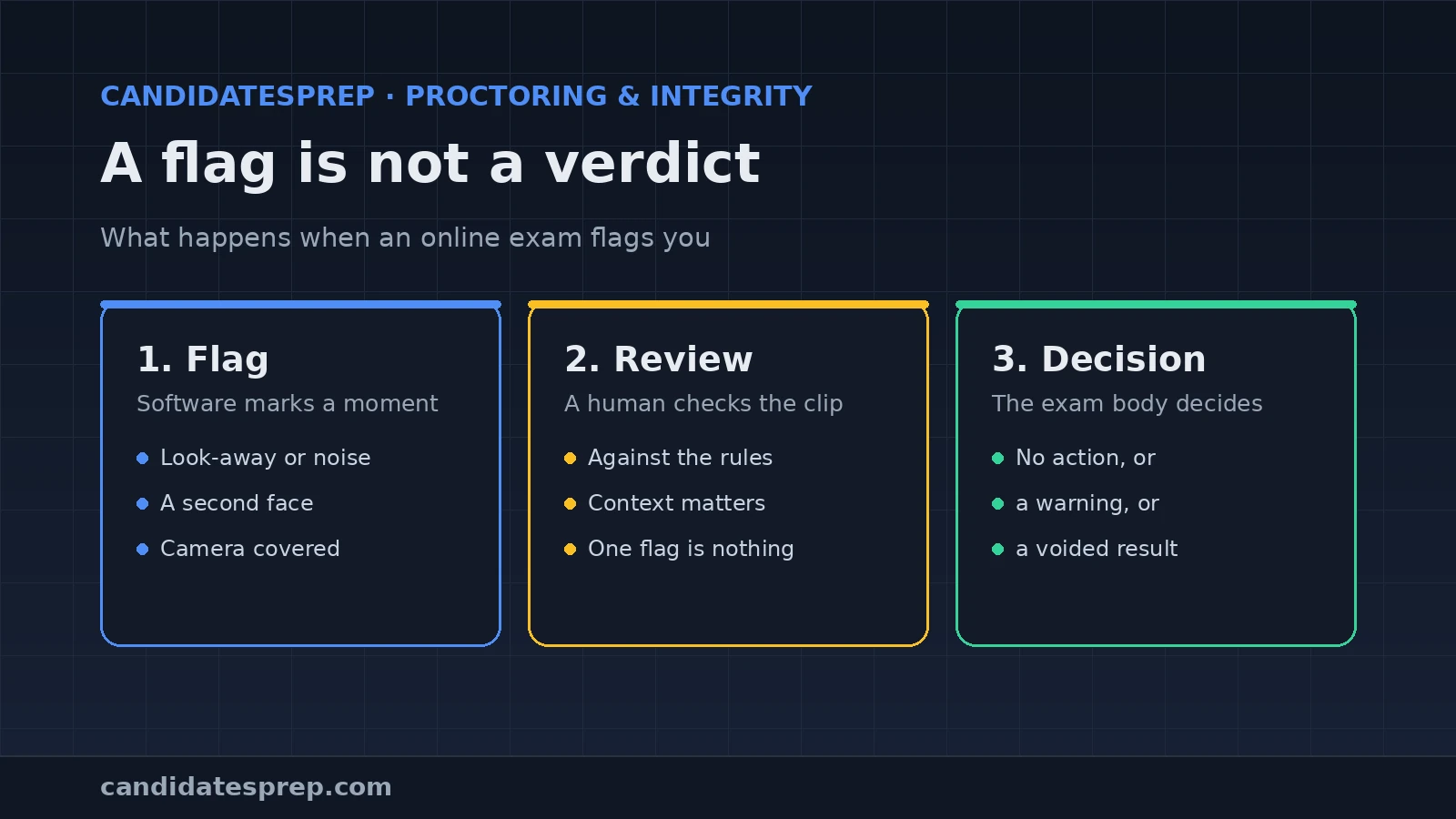
Most online proctoring works in layers. Software watches the session and marks moments that look unusual: looking away from the screen, a noise, a second face, leaving the room, or a covered camera. Those marks are flags. On their own they prove nothing. A flag simply tells a human reviewer, or the exam body, "look here". The decision is made by people, against the exam's published rules, not by the software.
Why honest candidates get flagged
Automated detection is deliberately sensitive, so false positives are common and usually harmless:
- Looking away to think, or glancing at a second monitor you forgot to unplug.
- A family member walking past, or a pet climbing onto the desk.
- Poor lighting or a webcam that briefly loses your face.
- Reading a long question aloud, or muttering to yourself as you work.
Reviewers know all of this. One ordinary flag rarely means anything; a pattern that matches the exam's prohibited behaviours is what draws real scrutiny.
What the review process usually looks like
Processes vary by exam and provider, but the shape is common. The software flags moments, a human reviews the relevant clips, and the exam body decides whether the rules were broken. If they believe they were, they typically contact the candidate, may ask for an explanation, and then follow their published academic-integrity or exam-security procedure. Outcomes range from no action, to a warning, to a voided result, depending on the rules and the evidence. Because the details differ between bodies, always go by the rules of the exam you actually sat.
What to do if you are flagged
- Do not panic; a flag is not an accusation.
- Read the exam's integrity rules and any message you receive carefully.
- Respond honestly and promptly, and give context for anything innocent, such as the pet, the second monitor, or the noise.
- Keep it factual and brief; reviewers deal with ordinary interruptions every day.
- If a decision still seems wrong, use the appeals process the exam body provides.
How to avoid needless flags
- Sit in a quiet, private room, alone, with the door shut.
- Clear your desk and unplug or disconnect any second screen.
- Check your lighting and camera before you start, so your face stays visible throughout.
- Read the rules on breaks, notes and scratch paper, and follow them exactly.
Why proctoring exists at all
It is easy to resent proctoring, but it is what makes an online result mean something. A certificate is only worth having if everyone earned it under the same conditions. Good proctoring, reviewed fairly by humans, protects honest candidates from being undercut by those who cut corners. For the mechanics, see how online proctoring works and proctored versus unproctored exams.
The bottom line
A flag is the start of a review, not the end of your result. Sit somewhere quiet, follow the rules, and if you are flagged, respond honestly. The system is built to let a human sort the innocent interruptions from the genuine breaches.
Sit realistic, proctored-style mocks so exam day holds no surprises: try the CandidatesPrep simulator, or book a demo to run secure exams for a cohort.