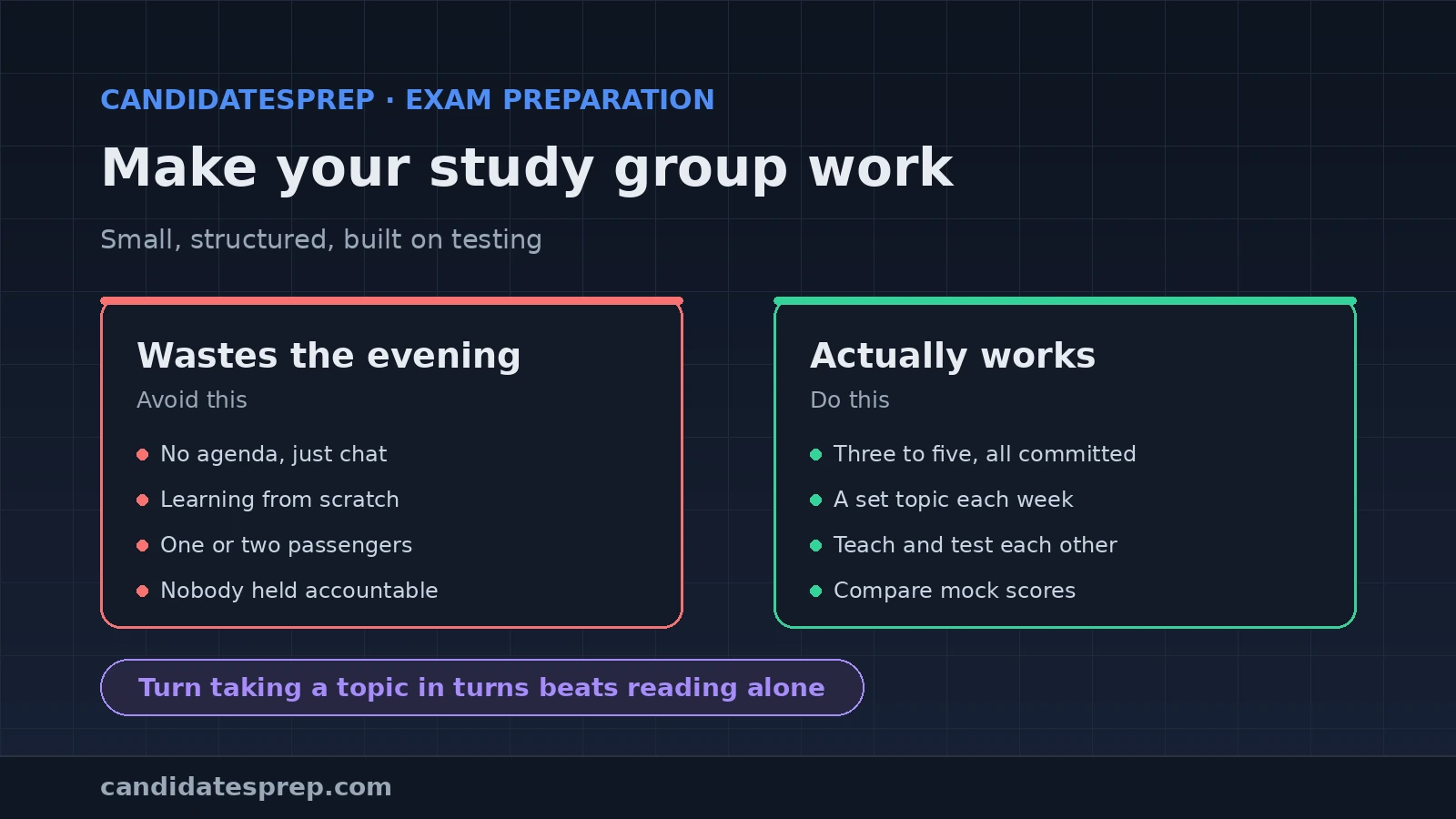
A study group works when it is small, structured, and built around testing each other rather than chatting. Run well, it adds accountability and fresh explanations; run badly, it is a social evening in disguise. Here is how to make yours genuinely useful.
Keep it small and committed
Three to five people is the sweet spot. Everyone should be preparing for a similar exam and genuinely committed, because one or two passengers quietly drain the whole group. Agree a regular time and protect it like any other study slot.
Give every session a purpose
Turn up with a plan: this week, domain three. Decide the topic in advance and rotate who leads it. A session without an agenda drifts into small talk, and everyone leaves feeling busy but no better prepared.
Teach and test each other
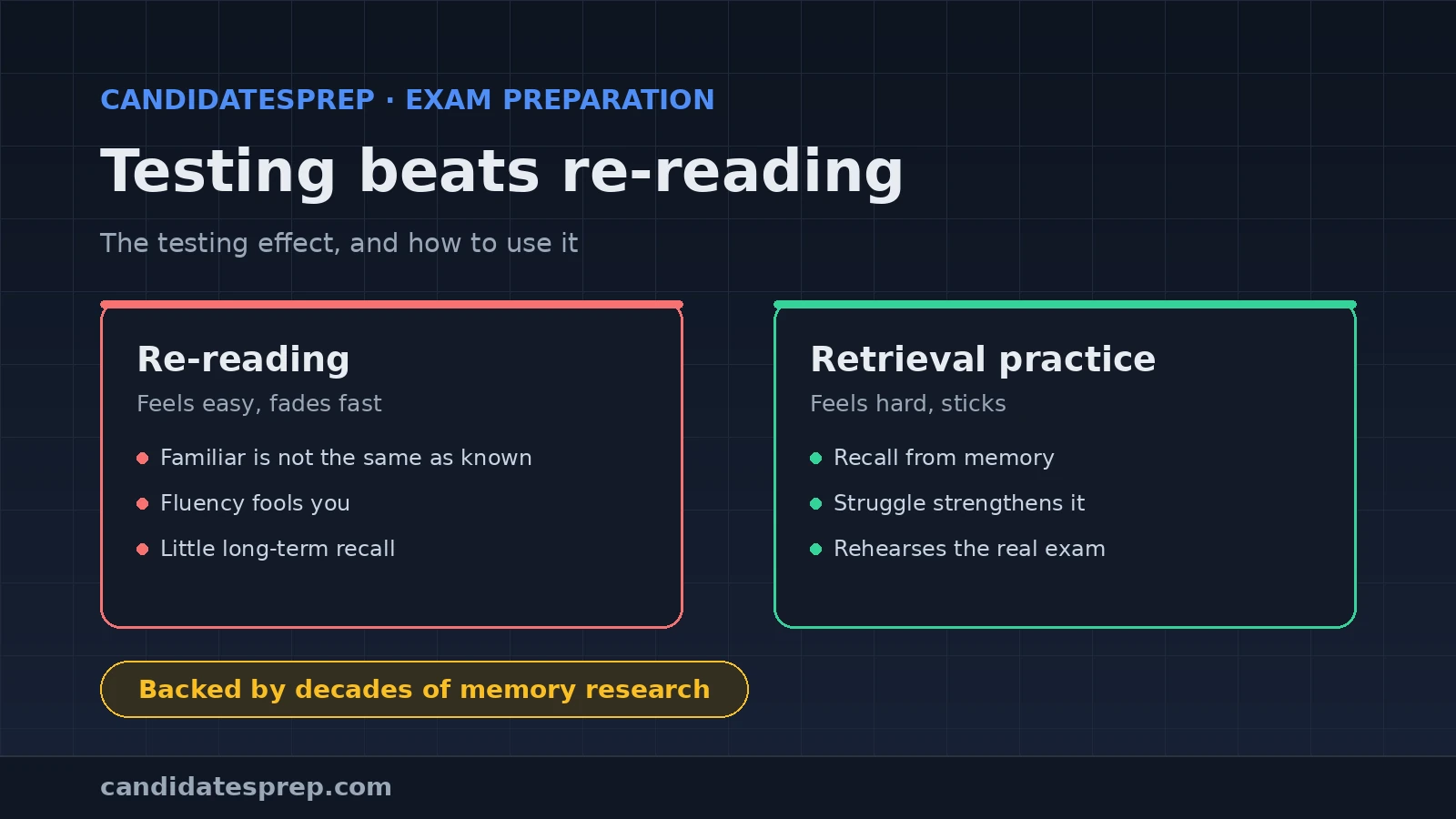
The most powerful thing a group can do is retrieval practice. Take turns explaining a topic from memory and quizzing one another with practice questions. Explaining out loud exposes gaps you did not know you had, and a peer's explanation often lands better than the textbook because it is pitched at your level.
Compare mocks, not just feelings
Sit the same timed mock separately, then meet to compare where you each went wrong. Shared weak spots become next week's agenda, and individual ones get a quick group explanation. This keeps the group anchored to evidence rather than to who feels most confident.
Set a few ground rules
- Start and finish on time.
- Phones away during focused blocks.
- Come prepared; the group is for practising together, not learning a topic from scratch.
- Be kind but honest when someone has drifted off track.
For trainers and institutes
A cohort is really a study group with structure. If you run training, shared timed mocks and a bit of visible progress turn peer pressure into momentum. CandidatesPrep lets trainers set the same mocks for everyone and see who is ready and who needs another session.
Practise under real exam conditions
Whatever your group does together, each member still has to perform alone under a clock. Individual timed mocks keep everyone honest about who is genuinely ready. CandidatesPrep scores by domain, so each person walks into the next session knowing exactly what to bring.
The bottom line
Small, committed, structured, and built on testing each other. Run it that way and a study group turns solo revision into something greater than the sum of its parts.
Bring your group up to exam pace: try a timed mock on the CandidatesPrep simulator, or book a demo to run shared mocks for a cohort.