A study timetable works when it is realistic, built backwards from your exam date, and forgiving enough to survive a bad week. Most timetables fail because they are too optimistic and too rigid to keep. Here is how to build one you will actually follow.
Start from the exam date, not today
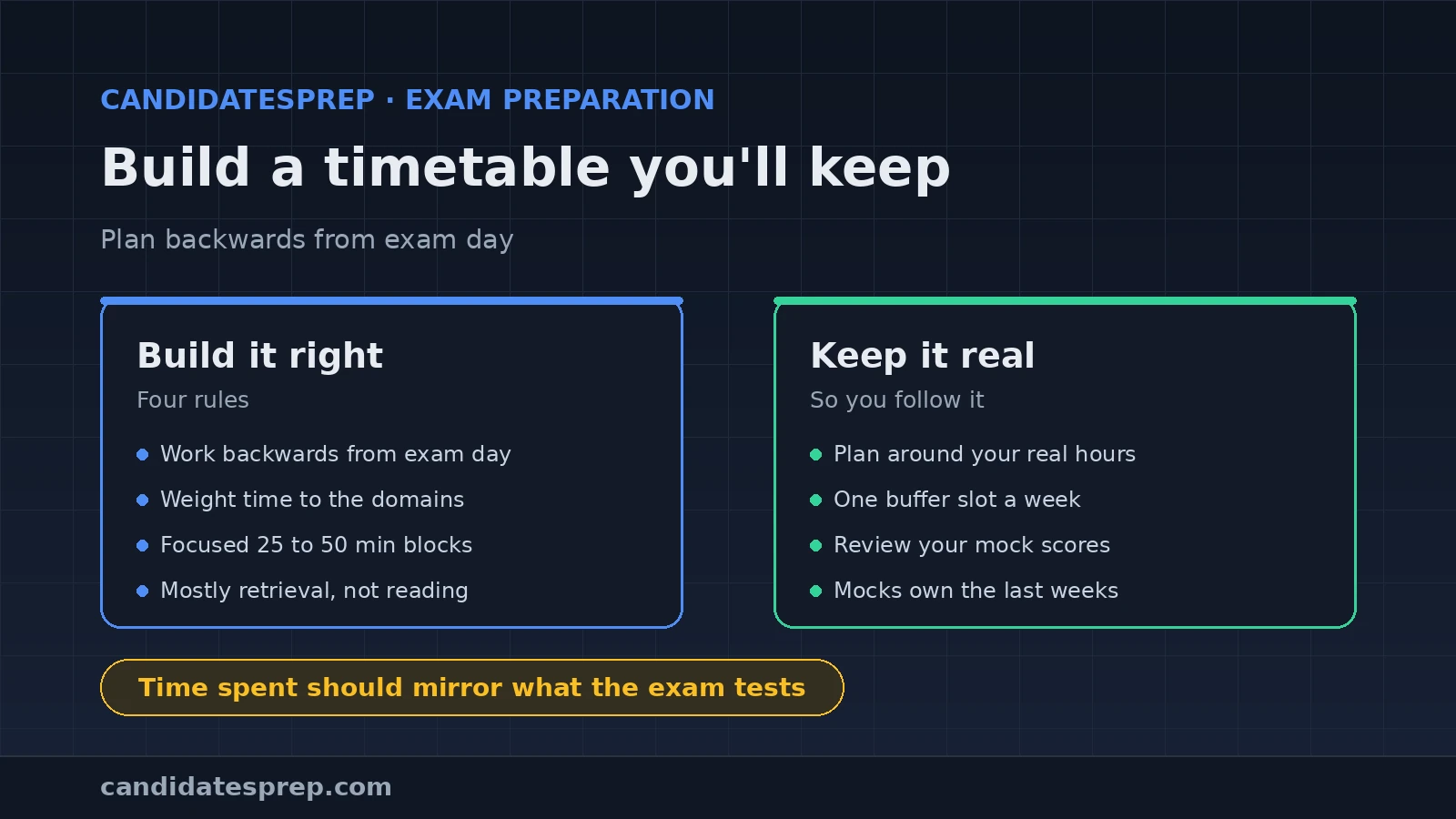
Count the weeks between now and your exam, and work backwards. Reserve the final week or two for review and full mocks, not new material. Split the remaining weeks across the topics or domains, and give the heaviest weightings the most time. If your exam publishes domain weightings, study in proportion to them: time spent should mirror what the exam actually tests.
Be honest about the hours you have
List the study slots that genuinely exist in your week: an hour before work, a lunch break, two evenings, a weekend morning. Build around your real life, not an imaginary version of it with eight free hours a day. A modest timetable you keep beats an ambitious one you abandon by Wednesday.
Study in focused blocks, not marathons
Break sessions into focused blocks of roughly 25 to 50 minutes with short breaks, rather than three unbroken hours. Attention fades, and a tired hour is mostly wasted. Put your hardest topics in the slots where you are freshest, not last thing at night when you are running on fumes.
Timetable retrieval, not just reading
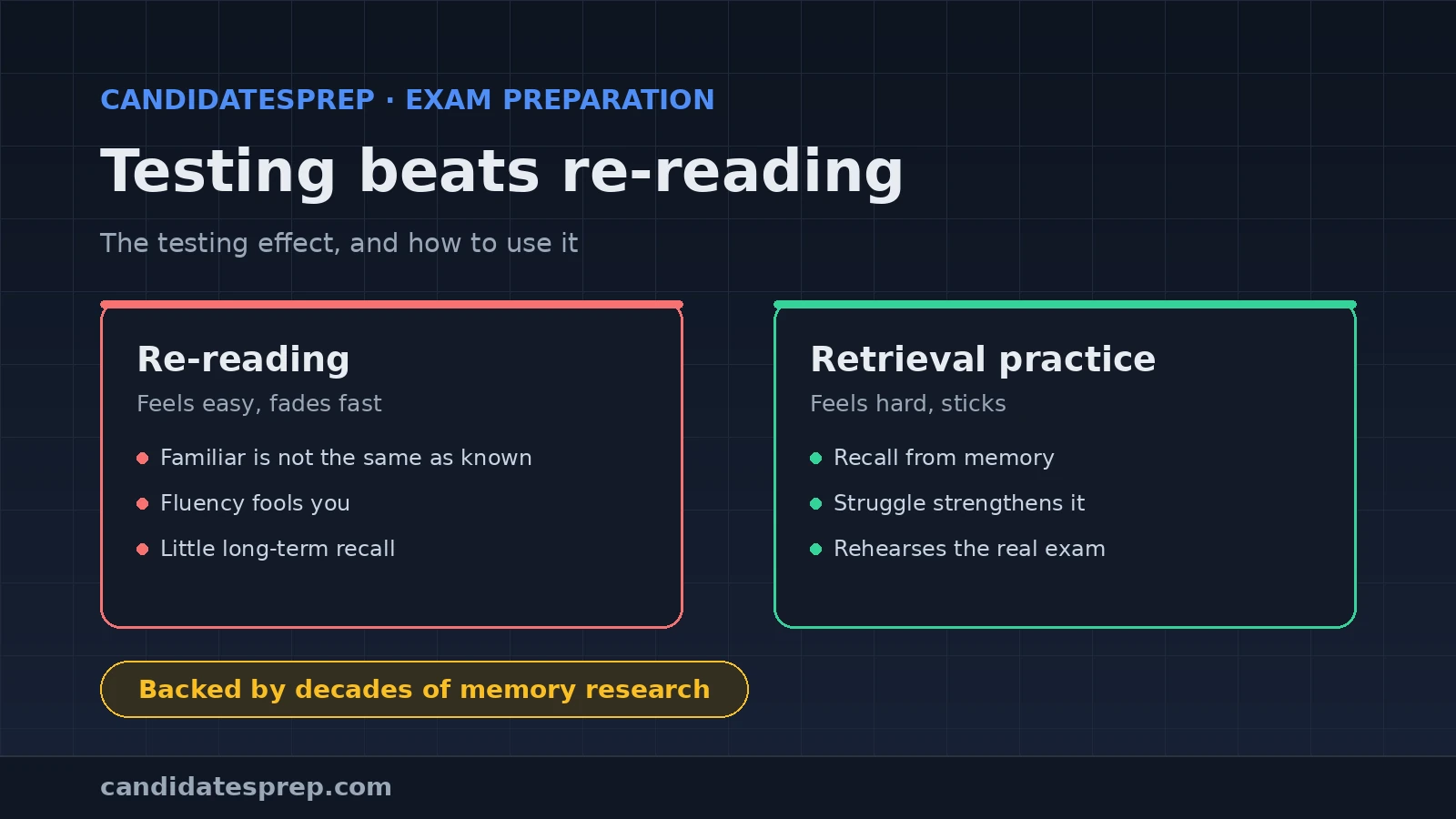
Plan the activity, not only the topic. Each slot should be mostly active: practice questions, recalling a topic from memory, or a past paper, rather than re-reading notes. Reading has its place early on, but testing yourself is what builds memory that lasts to exam day.
Build in slack and review
Leave one empty slot each week as a buffer for the session you will inevitably miss, so one bad day does not derail the whole plan. Every week or two, look at your mock scores and shift time towards your weak areas. A timetable is a plan, not a contract; adjust it as the evidence comes in.
Practise under real exam conditions
The last two or three weeks should be dominated by full, timed mocks. They rehearse pacing and stamina, and each one tells you exactly what to revise next. CandidatesPrep gives you timed mocks scored by domain, so every attempt is both practice and a ready-made revision list. Trainers can set a shared schedule and track a cohort's progress against exam day.
Exam-week checklist
- Switch from learning new material to reviewing and sitting mocks.
- Sit at least one full mock at the same time of day your exam is booked.
- Protect your sleep; do not trade rest for one more hour of cramming.
- Trust the plan you built, and taper rather than panic-study.
The bottom line
Work backwards from the exam, be honest about your real hours, study in focused blocks, and make most of that time active recall. Leave room to slip, review the data, and let mocks run the final stretch.
Ready to put your plan to work? Start a timed mock on the CandidatesPrep simulator, or book a demo to build a study schedule for a whole cohort.