A degree of exam nerves is normal and can even sharpen your focus; the goal is to keep stress manageable, not to eliminate it. The most reliable ways to do that are thorough preparation, good sleep, and a few simple techniques for the moment itself. Here is how to keep exam stress on your side.
Why some stress is normal
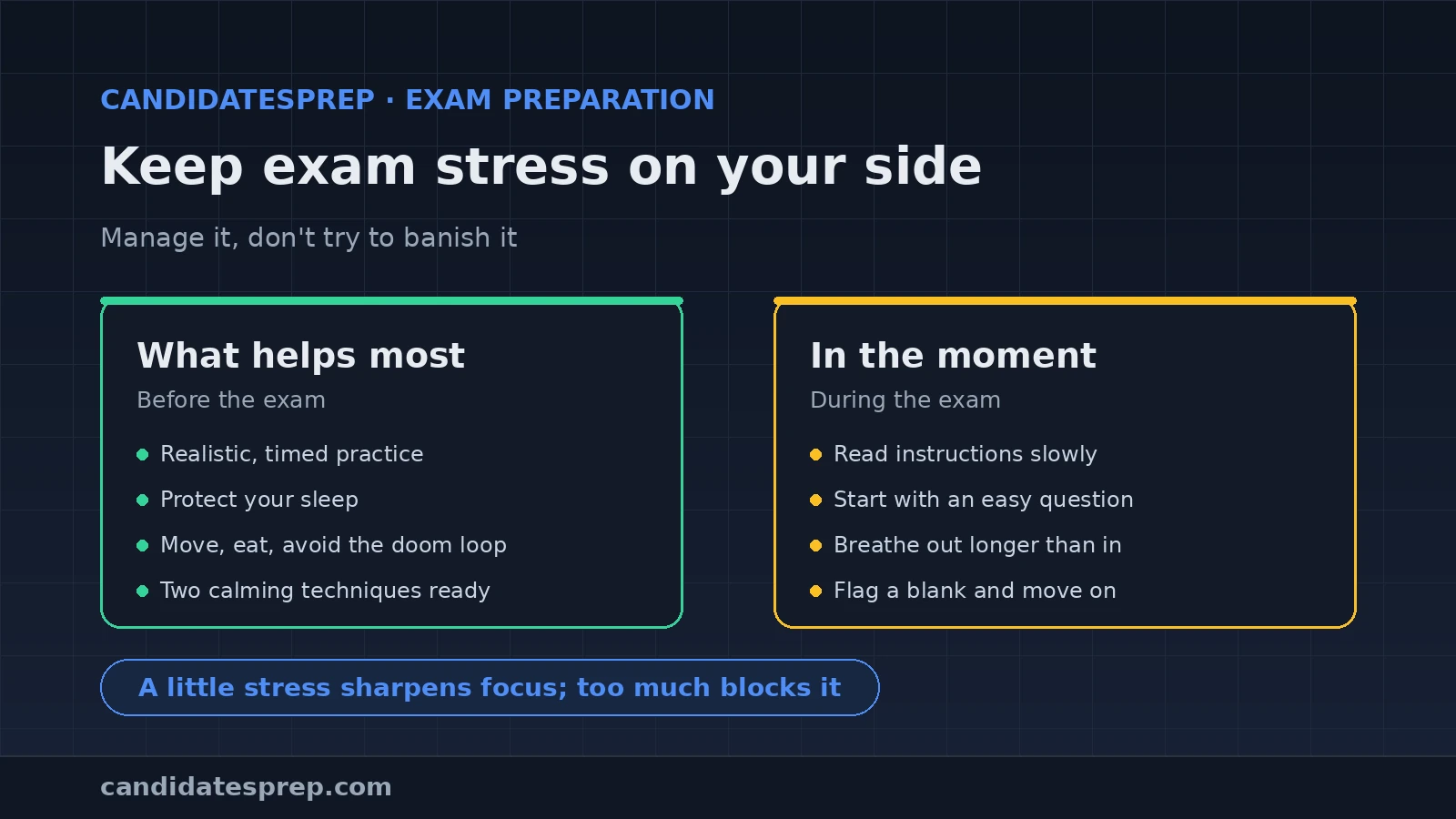
A little adrenaline improves focus and recall. The trouble starts when stress tips into anxiety that stops you preparing or thinking clearly. So the aim is not to feel nothing; it is to keep the dial at a level that helps rather than hinders.
Preparation is the best calmer
Most exam anxiety is really fear of the unknown. Realistic practice shrinks that unknown: once you have sat timed mocks and seen the format, exam day feels familiar instead of threatening. Confidence built on practice is far steadier than confidence built on hope, and it is the single most effective thing you can do about nerves.
Look after the basics
- Sleep: a rested brain recalls and reasons better than a crammed, exhausted one, so protect the night before rather than pulling an all-nighter.
- Move and eat: light exercise and regular meals steady your energy and mood in the run-up.
- Cut the doom loop: limit anxious note-comparing with peers right before the exam, which tends to spread panic rather than knowledge.
Techniques for the moment
- Slow your breathing: a few rounds of breathing out for longer than you breathe in helps settle the body's stress response.
- Ground yourself: quietly name a few things you can see and feel to pull your attention back to the present.
- Reframe the feeling: a racing heart is your body getting ready, not proof that you are going to fail.
During the exam
- Read the instructions slowly; rushing feeds panic and causes silly mistakes.
- Start with a question you can answer to build momentum and calm.
- If your mind goes blank, breathe, flag the question, and move on. The answer often returns once the pressure is off it.
When it is more than nerves
If anxiety feels overwhelming, persistent, or is affecting your daily life, that is worth taking seriously. Talk to your GP, a counsellor, or a trusted person, and check whether your school, university or employer offers support for exam stress. There is no prize for struggling alone.
Practise under real exam conditions
Because preparation is the strongest antidote to nerves, rehearsing the real thing matters. CandidatesPrep lets you sit timed mocks that mirror the exam format, so exam day becomes something you have already done many times rather than a leap into the unknown. Trainers can help a whole cohort build that same familiarity.
The bottom line
Aim to manage exam stress, not banish it. Prepare properly, protect your sleep, and keep two or three calming techniques ready for the day. And if it ever feels bigger than ordinary nerves, reach out for support.
Turn nerves into readiness: sit a timed mock on the CandidatesPrep simulator, or book a demo to prepare a group with confidence.